How encounters with other worldviews shape what we believe.
A note from the researcher.
Contemporary Britain is a diverse and vibrant place, where people hold a range of religious, nonreligious, spiritual, ethical and political beliefs. We encounter different worldviews in many settings, including our families, relationships, friendships, in education, online, and through travel and tourism. Although we are encountering alternative worldviews more than ever before, we know surprisingly little about how these encounters affect us.
As a psychologist operating at the interface with sociology and anthropology, I am particularly interested in the consequences of what sociologist Peter Berger called religious pluralism, and what I call religious diversity, for knowledge construction and epistemic (un)certainty. Berger’s views on this follow from his highly influential work, The Social Construction of Reality, which he wrote in the 1960s with Thomas Luckmann.
In traditional societies, people were usually immersed within a single social framework which consistently reinforced the same set of beliefs about the world. In contemporary diverse societies, that is no longer true. Now, we are frequently exposed to social structures, processes and people that represent belief systems that are different from our own. For Berger, this leads to relativisation — the recognition that our own worldviews are not inevitable, and, consequently, to uncertainty about our own beliefs.
This appears to be the logical conclusion following from an understanding of worldviews as social constructions derived from the social structure through which we live our lives. Thus, it is not surprising to see essentially the same argument made by another proponent of social constructionism, this time more within the psychological camp, Kenneth Gergen, who describes our immersion in a diverse social world comprising competing perspectives on reality as social saturation.

This area of research has important implications for how people create and sustain worldviews in diverse societies. Yet this element of Berger’s and Gergen’s theses has generated surprisingly little discussion and research. My research focuses on young people growing up in Britain. How do they navigate different belief systems in their everyday lives, and what are the implications for their own beliefs? I am exploring these questions with Dr Ana Fernández, with funding from the British Academy / Leverhulme Trust, using a mixture of quantitative and qualitative methods.
Our participants’ worldviews were affected by encounters with other belief systems in three main ways: resistance, uncertainty, and reconstruction. You can read more about each of these responses below.
Resistance
Often, people don’t change their own beliefs when they encounter a different worldview. They may feel that the other worldview is not true. They may prefer the values they associate with their own worldview. Sometimes, these encounters make people feel more confident about their own beliefs. Below we give examples from our research.
[At school] I had Muslim friends as well, friends that were Buddhists, friends that were Hindu, friends that were Christian, and we sometimes — it wasn’t like an everyday thing, but like once in a while it would come up like, oh, we talk about, you know, because we eat Halal food and they’re like, ‘Oh, guys, what is that, what’s Halal food? Why do you guys eat that?’ So [we would] really explain it to them, or if they were doing something like, in the Hindu culture where they have like these red threads around their hand [tied to brothers’ wrists by their sisters] and we’d ask them, ‘Oh, why do you guys do that? You know, what’s the thoughts behind this and stuff like that?’
You’re really curious as a teenager and you want to find out more — why are people doing what they’re doing. I asked my mosque teacher a lot of questions and I feel like she answered it in the way that it made sense to me. And when, like, all my questions were answered, I was like, OK, fine. I’m like, finally I do believe — like, Islam is the one I like.
— Kiran, Muslim
There was a quote that I remember was absolutely pinnacle. It was like, you don’t truly understand someone else’s view until you feel the pull of it. So until you’re slightly, like, ‘I could believe that’ — that’s the point where you’ve actually really understood it. So that changed a lot of how I then chatted to people, because it wasn’t just this thing of ‘Oh, what do you believe?’, like, get to it, ‘Okay, I know that, like, by the books’. But it was like, no, I want to get to the point where I, like, could believe this. Because that’s the point where I then get a choice, where it’s like ‘Okay, I’ve got this, which seems possible, and this which seems possible. Which am I going to choose?’ And that’s when you’re actually like, ‘No, I’ve chosen this.’
And so a lot of, like, for Buddhism, getting to a point of being like, ‘Okay, yeah, that makes sense. No, I get that.’ Like, I can see why that would be, like, why there’s a rhythm to it and there’s a way of interacting in the world that makes sense. And I can, like, I can get the pull of that. But I also — I choose to believe in Jesus.
— Lucy, Christian
Uncertainty
Finding that other people believe something very different to you can be confusing. Sometimes, it can make people question whether their own beliefs are true. Read on for examples from our research.
[Moving to another country] was a big culture shock for me. You know, there were so many different types of religion. And I remember just having so many different school holidays just because of the huge range of religions that there, there were. […] That’s maybe what kind of got me thinking that, you know what — why is Catholicism? Why is that right? Why is that true when there’s so many other people believing this, so passionate and living other ways?
— Phoebe, atheist; formerly Catholic
As I got a lot older, over a good few years I suppose, I thought about it and then my ideas completely changed. I suppose I believed everything about, that was written in the Bible. I believed in Jesus, I believed in all the stories that were told. As I got older, read more, watched a lot more TV — which may be true or not — documentaries. Just questioned it completely. I always, always thought, how could every religion be correct? And the only thing they all have in common is that there is a higher being, a God. That seems to be the only aspect I have kept.
— Paul, Catholic
Reconstruction
Sometimes, people see something they like in a different worldview. We found that full conversion from one worldview to another was rare. Sometimes, though, people take aspects of another belief system that they like, and add it to their own. Here are some examples from our participants.

When I was younger, I very much wanted to connect with something. So for a while, between the ages of probably about seven and eleven, I was, like — I almost tried to, not make myself believe in anything, but I’d test out various religions for myself. So I thought, ‘Oh, Christianity, what do I like about this? What don’t I like about this? Judaism, what do I like, what don’t I like?’ I think from that sort of testing, I’ve just sort of moulded myself a sort of meaning that fits. And taken what I like and left anything that I resent.
— Shannon, atheist
I don’t really see a way out of being eclectic, because if I was to do that, I would have to give up certain practises, um, and I don’t really think, like, one… one practice is a better form than the other. Like Christianity would say, like, oh, well, if you, like, do witchcraft or Tarot cards for example, or, um, I don’t know, dancing under the moon — um, that’s like, that’s the Devil speaking to you. I don’t really think that. So, um, I don’t think I would feel like I could ever fully express myself through Christianity, but at the same time, could I just do, like, Pagan beliefs? Could I find a coven and be content with that? No, I don’t think so. I think I would always have part of my Christian culture, like, dictating part of how I think. So, um, I don’t really think I could not be eclectic, I think I would find it really hard.
— Mia, religious and spiritual
About the author
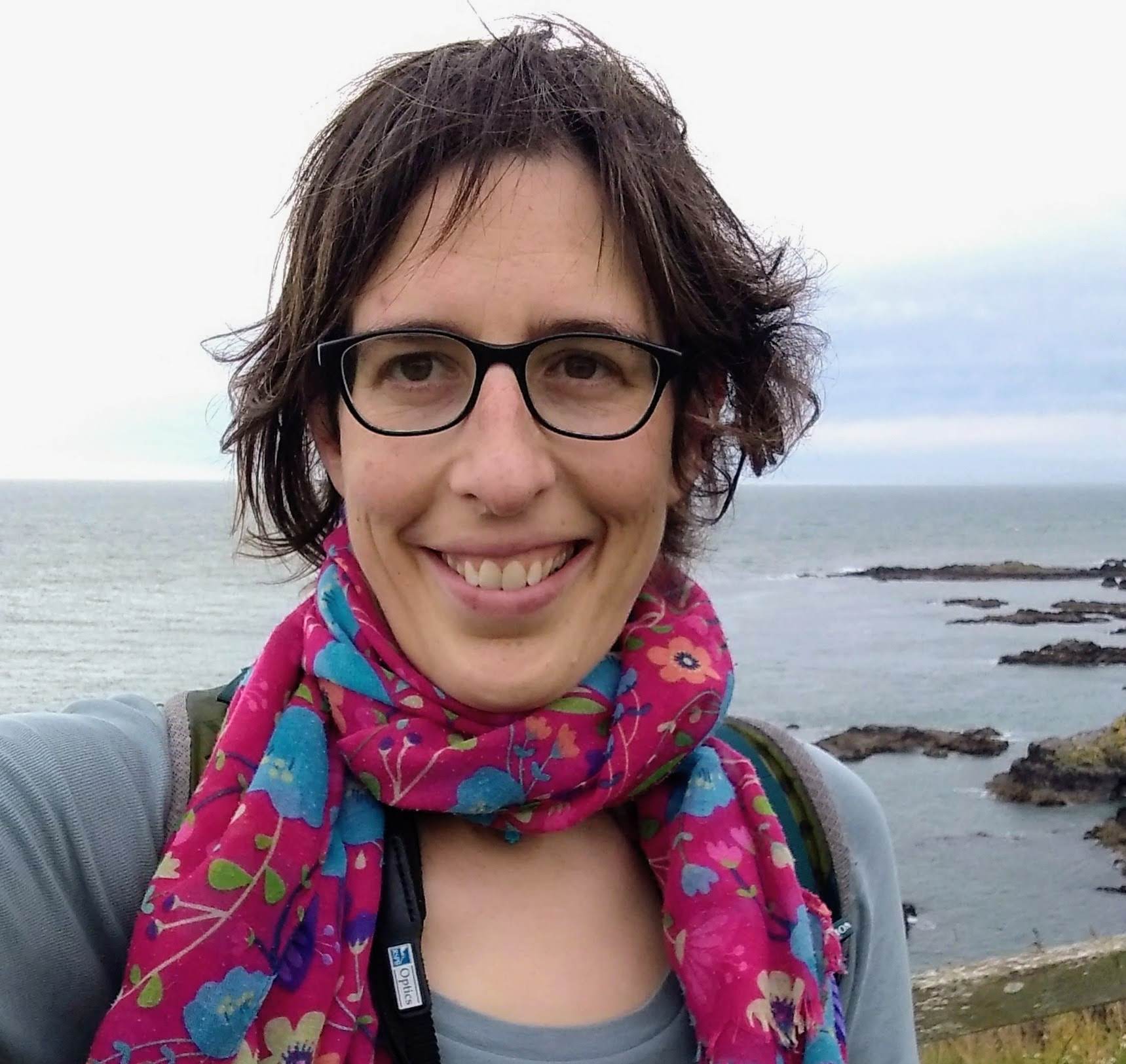
Dr Ruth Woods is a Lecturer in Psychology at Robert Gordon University in Aberdeen. Currently, her research focuses on experiences of ethnic and religious diversity in Britain. You can read more about her research at her university webpage.
Please feel free to get in touch with Ruth at r.woods3@rgu.ac.uk.